Florida Building Code: What It Means for Window and Door Replacement

For any property owner or manager in South Florida planning some sort of renovation, it is vital to understand the Florida Building Code (FBC) and its requirements. The Florida Building Code was created in 2000 in response to Hurricane Andrew in 1992. Before then, counties and cities could create their building codes so long as they met state minimums. However, Hurricane Andrew demonstrated how lax codes or poor enforcement could endanger lives and property and create a statewide disaster. Municipalities can make amendments that are stricter than the statewide code, but no local code can be lesser than the current edition of the FBC.

Florida Building Code Explained: Window and Door Replacement Requirements

The Florida Building Code is updated every 3 years to accommodate changes in climates, the housing market, and building material industries. The newest version of the FBC will go into effect January of 2021, and it will be referred to as Florida Building Code 2020 (FBC 2020), as it will be created this year. FBC 2020 will be the 7th edition of the Florida Building Code.

A common question among Florida property owners is "Are impact windows required in Florida?" The short answer is no. However, when it comes to replacing or installing new windows and doors, the Florida Building Code has very specific requirements as to what is acceptable. According to FBC 2017, the version currently being enforced in our state, all glazed openings within a structure need to either be impact-resistant or use impact coverings (like shutters). Some single-family homes can get approval for using plywood, but there must be pre-approved fastening systems in place.

All window and door projects, both replacement and new construction, need to be permitted with the local municipality. Therefore, no matter the type of product being installed, it must be proven to the building department when applying for the permit and during inspections that there is proper hurricane protection either installed or on property.

Since the Florida Building Code requires either shutters or hurricane windows (another name for impact windows), homeowners and property managers must decide which protection is right for their property. Since both options are acceptable within FBC 2017, the decision will likely come down to other factors like cost, labor, aesthetics, or what other additional benefits there may be. If you are trying to decide between hurricane shutters or impact windows and doors to protect your home and family, visit our shutters vs impact page to download a free copy of our comprehensive analysis on the subject.

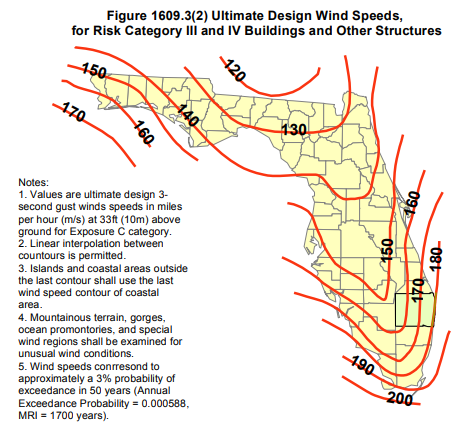
South Florida is a unique place when it comes to home building, and windows and doors are no exception. While all of Florida must follow FBC, areas throughout South Florida, like South East Florida, have even more stringent codes. One such example is the High-Velocity Hurricane Zone, aka HVHZ. HVHZ is an area consisting of coastal Palm Beach County, Broward County, Miami-Dade County, and Monroe County. HVHZ requires stronger impact products than the other parts of Florida, meeting wind speeds between 170 mph and 200 mph, depending on your exact location.

Other areas in Florida require impact products or shutters that meet Wind-Borne Debris (WBD) certification. These products can be certified as impact-resistant but would not be authorized in the HVHZ unless they pass those tests as well.
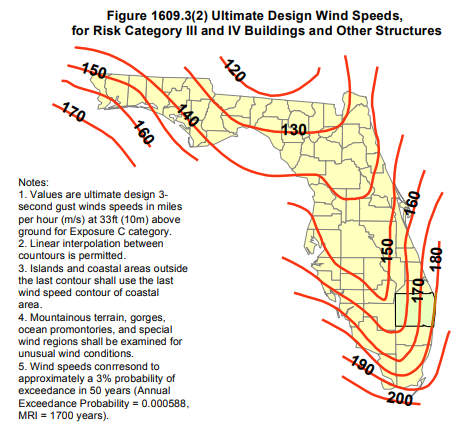
Florida Wind Speed Map
Image Source: discover.pbcgov.org


How to Determine Your Required Design Pressures (DPs) 

Determining whether you are in the HVHZ is the first step in deciding the proper products needed for your project. The next consideration is what exposure the building is considered. Relation to large open areas (like bodies of water or large areas of flat land) and height of the building determines the exposure. Our entire service area falls under either Exposure C or Exposure D. Exposure C is for any building under 60 feet tall and that is at least 1,000 ft from a large open area. Exposure D is for any building within 1,000 ft of a large open area that is at least a mile wide, or any building that is above 60 ft tall no matter the location. Certain important infrastructure buildings like schools and hospitals must meet Exposure D requirements no matter their size or location.

Finally, within a single building, there are 2 different zones; zone 4 and zone 5. This is because the corners of buildings experience stronger forces from wind and flexion from the building moving during a storm. These zones are determined by the length of a single wall. Zone 5, which can require significantly higher negative design pressure ratings than zone 4, are any openings that are within 10% of the wall’s length from the corner. For example, for a wall measuring 20 ft, any opening within 2 ft of the corners would be considered zone 5 and need higher design pressures.

What Does This Mean for Your Window and Door Project? 

So, what do these requirements mean for you? First and foremost, the specific FBC requirements for your building will determine what design pressures (DPs) your new products, whether they are hurricane shutters or impact windows and doors, must meet. All these products must undergo both missile testing, which determines impact resistance, as well as cyclical testing. The cyclical testing determines the product’s design pressures, both positive and negative. These DP ratings refer to how much pressure, measured in pounds per square foot (psf), that the product can withstand before it breaks or is altered beyond acceptable parameters.

If your building is required to have high DPs, sometimes negative DP values for high-rises can be as high as -130psf, you may become more limited in size or material types for your hurricane protection. To meet the changing demands of the Florida Building Code, manufacturers are constantly innovating to create larger and stronger products. Impact window and door manufacturers like ESWindows and CGI Commercial offer aluminum windows as large as 15 ft tall and are approved for use in the HVHZ.

The Florida Building Code can be complicated to understand for those with little or no experience dealing with it. If you are considering new impact windows and doors, it is recommended that you speak with a seasoned professional who understands all these requirements and has access to a variety of product options to meet the demands of the FBC. To get a free consultation and estimate from the experts at Window & Door Replacement Company, fill out our form or call 561-623-8446.
Blown Away: Hurricane Shutters vs. Impact Windows – Revisited

The 2017 Hurricane Season was a particularly active one, with a total of seventeen named storms, 10 of which became hurricanes. Of those 10, 6 became major storms (Category 3 or stronger on the Saffir-Simpson Scale). These storm systems can carry winds anywhere from 111-160 miles per hour which can cause considerable damage to the homes in their path. When thinking of guarding your home from such potentially devastating storms, there are a couple of options to consider. Here is a look at some of the important things to know about hurricane shutters and hurricane impact windows.

Important facts about hurricane shutters:

  • If considering hurricane shutters it is important to note that installing them over existing windows that do not close properly or are crank-closed, will not be efficient. Negative air pressure created by hurricanes can cause windows and doors to dislodge, allowing for water and wind damage. The shutters can contribute to damage as the panels can also be displaced due to the pressure.
  • Installing new, non-impact windows and shutters can be costly and will not offer drastic improvements in performance when it comes to withstanding air pressure changes and high winds.
  • Shutters can be difficult to install or operate, especially in homes with a second or clear story.
  • Installing Shutters requires that holes be drilled to the exterior of a home which can create points for water intrusion.

Impact-resistant windows and doors provide many advantages:

  • Hurricane Impact windows and Hurricane Impact Doors are configured to withstand high winds, pressure and corrosion. They are stand-alone units that will not require additional coverings or adjustments prior to a storm.
  • Impact products have many benefits, including noise reduction (up to 70%) and improved home security.
  • Unobstructed views during a storm allow you to stay informed and see what is happening outside your home.
  • UV coatings are available for impact glass and provide your home with sun protection and improved energy efficiency, year-round.
  • According to the 2017 Cost vs. Value Report, Impact windows can improve your home's resale value and provide up to 110% return on investment. Click Here to view Cost vs. Value Report.

Cost vs. Value Report

Florida’s Coastal environment presents unique challenges for homeowners and Window & Door Replacement Company is here to help you protect your investment.

How Impact Windows Help Unique Situations

Every home can benefit from the hurricane protection provided by impact windows and doors. Because of the additional benefits of hurricane impact products, there are some homes in unique situations where their windows and doors can do more than just improve their storm protection.  

Hurricane Impact windows are most well-known for the impact-resistant glass used in their construction. To be certified as impact-resistant, the glass needs to have large pieces of debris shot at high speeds. If the glass does not become compromised, meaning the object does not penetrate through the glass, it will be impact-rated. For those who live in Golf and Country Clubs, impact-resistant windows and doors become a simple way to protect your home from flying golf balls. 

The unique composition of impact glass, particularly the vinyl interlayers, reduces sound from outside by up to 75%. While everyone has likely experienced a rowdy next-door neighbor or early Saturday morning landscaping, those in ultra loud areas will benefit even more. Neighborhoods near train tracks, large and small airports, or major roadways can reduce a large portion of the near constant noise by upgrading to impact windows and doors. 

It is usually a good assumption that for those who upgrade to hurricane impact windows and doors, the top priority is protection. Normally that means protection from the destructive potential of hurricanes and the tornadoes they may spawn, but what about intruders and vandals? Since these windows are resistant to strikes from items like crowbars, bricks, hammers, and even small caliber bullets, it becomes nearly impossible for intruders to gain entry into your home or business. Most products also include enhanced locking mechanisms, like multi-point locks on entry doors. Those wanting extra security if you’re not in a gated community, near high traffic areas, or a business looking for additional protection can enjoy these 24/7 security benefits.  

Whether you are in one of these unique situations, or simply want the hurricane protection of impact products, our team of experts will ensure you get every benefit in an impact window and door upgrade. Request your free consultation here or by calling our office at 561-623-8446. Our Design Showroom also welcomes walk-ins Monday thru Friday 8-5pm.  

Expand Your Indoor/Outdoor Space with Sunrooms

Sunrooms, Florida Rooms, Lanais, Enclosed Patios. These terms are all used interchangeably, but they are in fact all considered different types of structures. They do have similarities, in that they are all used to expand our indoor living spaces to include more of South Florida’s beautiful outdoors.

To understand these differences and what types of projects WDRC can assist with, we must first explore the 2 classifications for these structures, habitable vs non-habitable.  

Habitable:  
  • Requires a GC and engineering 
  • Needs footers and structural headers 

  • Requires full electric and A/C modifications 

  • Has finishing requirements like and drywall 

  • Floor needs to be raised to be flush with the existing interior floor 
Non-Habitable:  
  • Requires engineering 

  • Existing windows and doors between interior and outdoor space need to remain 

  • Concrete or paver landings required outside new openings 

Both types of structures require a licensed engineer to evaluate the space, create detailed structural plans, and sign off on the project moving forward based on those plans. Window & Door Replacement Company partners with a local engineering firm to assist with these plans and evaluations, making us a one stop shop for non-habitable sunroom projects.  

As an elite dealer for many of the industry’s top-rated products, we offer the best selection of Sliding Glass Doors, Fixed Windows, and Bi-Fold Doors for Sunroom projects. If a non-habitable sunroom is the right choice for your home and goals, Window & Door Replacement Company can provide a total solution with excellent workmanship guaranteed. For a free sunroom estimate, request a consultation.  

What Goes Into an Impact Window Replacement

When considering upgrading your home to hurricane impact windows and doors, a question we often receive is ‘What is the process for Impact window and door replacement?” As with any home improvement investment, it is important to make sure every detail is correct to ensure a seamless install and flawless finish. To accomplish this, our team uses a 5-Star Project Management System from start to finish.  

The first step in the process is our free in-home consultation. Our consultations go beyond just simply measuring the openings and matching exactly what you have. We will take the time to explain to you what alternatives may be available to you that you may have not considered before. Some examples include recessing sliding glass doors to remove the extra threshold height, changing a single hung window to horizontal roller to make it easier to operate over large furniture or counters, and changing window configurations to maximize the glass size to improve your view.  

Window & Door Replacement Company partners with more than a dozen of the industry’s most innovative hurricane window and door manufacturers. To provide custom total home solutions, WDRC will combine as many or as few different brands as you would like to create the ideal combination of impact products for your home’s style and your project goals. The best way to choose your package and options is to visit our design showroom. We have full sizes of all the most popular products from each manufacturer so you can compare and contract everything from colors to operability.  

Once you have created the ideal window and door package for your home, we begin our meticulous order process to make sure your custom hurricane impact products are made exactly how you want and that they will fit into your home perfectly. We begin that process with a detailed final measure of every opening, down to the 1/16th of an inch. A perfect fit means a quicker installation and less finish work.  

While we strive to provide unique options for South Florida homeowners, we always ensure that the products chosen will meet the building code, any requirements of your local municipality (like historic districts), and your HOA/POA. Before your products are custom ordered, we will wait to receive confirmation that your package will be approved by these entities. If we did not wait for that confirmation, this could lead to costly change orders and/or re-orders for you that we want to avoid.  

Our warehouse team is up next, checking all your products as they come in to make sure nothing is missing and is exactly what you ordered. They also coordinate with each manufacturer to make sure your entire package has arrived before install starts.  

The installation is the most crucial part of an impact window and door project. Every aspect of our installation is overseen by our project managers, ensuring everything from in-home protection to layers of waterproofing are up to our high standards.  

The final step of the process is for our walk-through and final inspections. The walk-through is for you as the client and our Project Manager to take a final look at all the newly installed products to ensure your satisfaction as well as the operability. The final inspection is conducted by the municipality your permit came from, whether that is the county or your local city/village. Passing the inspection will close out the permit for the project, meaning the install of your new windows and doors meet all building codes and perform as they should. 

Window & Door Replacement Company is the unparalleled solution for South Florida homeowners to upgrade their hurricane protection to impact windows and doors. Our 5-Star Project Management system, coupled with our extensive product selection, is what has earned us an impeccable reputation. For a free consultation for upgraidng your home, request an estimate or call 561-623-8446.  

Why Impact Windows Are a Good Choice for Seasonal Residents

While most of the year Floridians enjoy sunshine and lovely weather, we all know that Hurricane Season can bring powerful storms and the subsequent damage. Having a plan for protecting your home is vital for all South Florida residents, but especially for seasonal residents who need to ensure either to protect their Florida homes before they leave for the summer or have a reliable person available to deploy protection at a moment’s notice.

For both full-time and part-time residents, window and door protection is one of the first priorities for home protection, but that does not mean that the process of doing so is the same for both. For seasonal residents looking to make window and door protection as simple as possible, upgrading to impact windows and doors are a great choice of an investment.

Simplicity is not the only reason upgrading is a good idea to consider, and below we outline several of those benefits.

Effortless Storm Protection

There is a reason that impact windows and doors are often referred to as hurricane windows and doors. That is because protection from damaging wind and debris during hurricanes is their main purpose and function. Since the Atlantic Hurricane Season corresponds with the most common months for seasonal residents to be living outside Florida, the likelihood is you will not be available to protect your Florida property when a storm strikes.

If you do not have the 24/7 protection of impact windows and doors, this leaves you with just a few options. First, you may need to deploy your hurricane measures (i.e. close your shutters) before you leave for the Summer, have an arrangement with someone to deploy your shutters for you, or risk major damage to your home. While the first 2 options may protect against wind-borne debris, they can create other issues of their own, which are detailed further below.

Continuous Intruder Protection

Aside from storm protection, impact windows and doors offer 24/7 protection from intruders. The biggest part of that is the impact-resistant glass, making it virtually impossible for burglars to get into a home by smashing windows or doors to gain entry.

According to Security Systems of America, it is best practice for home security to make it appear as if someone is still home when you are out of town, whether it is for a few days or an entire summer. Closed shutters on all the windows is a very clear indicator of absence, so having impact windows that can remain uncovered coupled with timers on indoor lights can create the illusion of an occupied home.

Improved Climate Control

When preparing your Florida home for your Summer absence, climate considerations are a huge part of the preparation. It becomes a balance of keeping your home’s climate dry and cool enough to prevent mold while not overtaxing your home’s cooling system and electric bills. Hurricane windows and doors can help with that. Impact products offer many options to improve your home’s energy efficiency and indoor climate, like glass coatings and frame material options.

No matter which impact window and door options you choose, you will get better results from these products than metal shutters, whether they are manual, accordion, or roll down style. Both steel and aluminum, the 2 most common materials used to make hurricane shutters, and heat conductors. The heated air generated can also get trapped between the shutter and window, and with the shutters closed for long periods of time means there is no way for this hot air to efficiently vent away from the home. 

Improved Resale Value

While selling your Florida home may not be in the immediate future, investing in an upgrade to impact windows and doors has proven to get a large return on investment when the property is sold.

Possible Insurance Savings

When owning multiple properties, trying to reduce costs like homeowner’s insurance is likely a top concern. In Florida’s marketplace, many people try to get every discount possible on homeowner’s insurance, and impact windows and doors may help with that. Many Florida insurance providers may offer a discount on your premium for properties with upgraded hurricane protection, like impact products and improved roofing.

Ongoing Benefits for Many Years to Come

For those who may start as seasonal residents but also hope to or plan to make the move to Florida permanent, the benefits of upgrading are two-fold. First, you can take advantage of all the benefits of impact products for seasonal residents during that time in your life, then you can enjoy the benefits full-time for many more years once you make the move to your Florida residence permanent.


2025 Hurricane Season Prediction and Prep

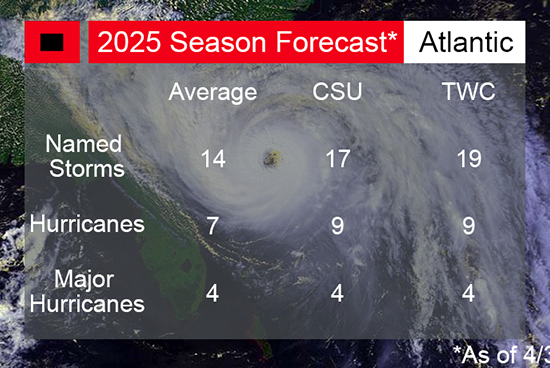
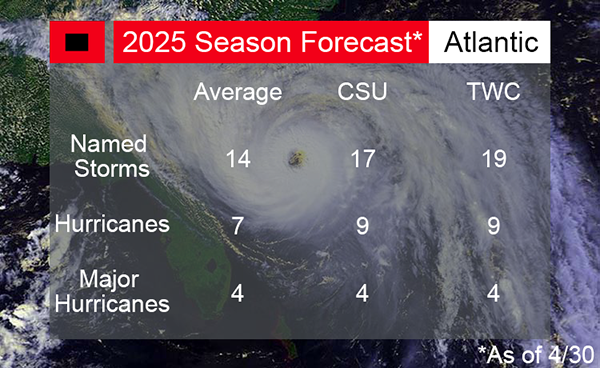
We are now only one month away from the 2025 Atlantic Hurricane Season, and now is the time to prepare your home and family. Forecasts for the upcoming season from The Weather Company and Colorado State University predict an average to above average season in terms of number of named storms, number of hurricanes, and number of major hurricanes. 

In addition, The Weather Company, owner of The Weather Channel, predicts an above average number of US Coastal landfalls this year as well. There is no indication if those predicted landfalls indicate either coast of Florida, but we know there is a high likelihood of some tropical activity for the state any hurricane season.  

While these forecasts are strictly predictions based on factors that may or may not come to pass, these entities have a good track record of being close to the final reported intensity of a season. In 2024, Colorado State University (CSU) accurately predicted 11 hurricanes and 5 major hurricanes. While their named storm prediction of 23 storms was over the final number of 18, it did still align with their prediction of that final number being above the average of 14 named storms.  

Regardless of how many storms end up forming in the course of the season, it is just as important to prepare your home and family each and every year. Doing some pre-season prep can save time and frustration if there is a storm coming later on. You can even save money on supplies by stocking up when items are on sale before the season, during the annual storm prep tax holiday, and before scarcity may affect pricing.  

Some basic steps to take now include:  

Prepare Your Yard

Do any large landscaping and yard trimming projects now while there is time to safely haul yard debris away.  
Never trim trees in the days leading up to a storm. Collection will likely be suspended and larger pieces can become projectiles in high winds.  

Review Your Emergency Plan

Review important documents, including insurance policies, and determine what documents need to come with you in an evacuation. Creating digital versions may also help safeguard contents.  
Create an evacuation plan, if needed. Check your county’s evacuation zone maps in order to determine if you live in a mandatory zone, as it is possible that you will be required to leave your home.  
Sign up for emergency alerts from your county’s emergency management department. You can receive text alerts before, during, and after a storm. 

Inventory Supplies & Replenish as Needed 

Check your emergency supplies. They do not need to be cycled out as frequently as food and water, but it is good to check they are still functional with within expiration dates. This includes things like Batteries, Flashlights, Emergency Radio, Sanitation Supplies, etc. 
Cycle out old non-perishable food & water and make sure to have plenty of new food and water when the season starts. Guidelines state having at least 5-7 day supply for each person and pet in your home. For water, this means 1 gallon per person per day.  
Check your stock of medical supplies, both prescriptions and first aid. Prescriptions may not be able to be re-filled until right before a storm hits, but check with your doctor and insurance company on best practices on either getting extra before storm season or refilling before a storm hits. 

Prepare Your Home 

Clean out gutters and other possible flooding locations to improve drainage away from your home.  
Ensure you have code compliant protection for all windows and doors in your home.  

If your window and door protection is old, failing, not up to code, or difficult to deploy, it may be time to consider upgrading to hurricane impact windows and doors. For a free consultation, request an estimate with our top-rated team of experts.  


Safeguarding Condo Buildings - Milestone Inspections and Beyond

In 2021, the tragic collapse of the Champlain Tower South, also known as Surfside Tower, shocked not only the Florida Condo community but the nation as well. In light of this horrible event, the Florida Legislature has enacted new laws to help ensure the safety of our millions of condo residents.   

The biggest change is the implementation of the Milestone Inspection. This inspection is mandated to occur 30 years after initial construction of the building, and again every 10 years after that. For buildings within 3 miles of the coastline, and therefore closer to more potentially corrosive elements, the inspection must happen 25 years after initial construction and every 10 years after that.  

Per the statute from the Florida Senate,“ ‘Milestone inspection’ means a structural inspection of a building, including an inspection of load-bearing walls and the primary structural members and primary structural systems....” (Senate) Exterior windows and doors are an integral part of the structure of a condo building, so they are one of the necessary components to be inspected thoroughly.  

Per the Florida Building Code Milestone Inspection Guidelines, “Window and door condition is of considerable importance with respect to two considerations. Continued leakage may have resulted in other adjacent damage and deteriorating anchorage may result in loss of the entire unit in the event of severe windstorms even short of hurricane velocity.” 

Once an inspection is complete, building associations have 365 days in order to complete the designated repairs in a manner that makes the building structurally sound and up to code once again.  

The requirements of the Milestone Inspection are not just important to those condo buildings approaching the 25 or 30 year deadline. It is vital that buildings undergoing any construction project, whether it is being done in individual units or to the whole building, understand what components are important to structural integrity and what may cause deterioration.  

At Window & Door Replacement Company, we take many precautions while conducting work on condo buildings in order to ensure safety and security during our work and for decades to come. Some of these precautions include:  

  • Obtaining x-rays via a 3rd party to determine locations of post-tension cables 

  • Using shorter fasteners and ‘safety chucks’ that automatically shuts off in the unlikely event a drill bit encounters a post tension cable during installation 

  • Verifying wind load calculations for each floor, unit, and window/door opening via a 3rd party engineer to ensure proposed products exceed current building code requirements 

  • Using products with stainless steel fasteners, 2605 paint finishes, and appropriate large or small missile rated glass to ensure longevity of all window and door components 

All our condo projects, regardless of size and scope, are managed and reviewed by Roldan ‘Ro’ Romero, our Director of Sales and Condo Specialist. Ro has over 20 years of experience with impact window and door projects in South Florida condos and is unmatched in his expertise on the requirements of the Florida Building Code as it pertains to oceanfront condos. Ro has developed our company’s comprehensive condo project standards to ensure every project meets current standards, and help safeguard against potential code changes in the future. 

Window & Door Replacement Company is the unparalleled solution for upgrading your building’s hurricane protection to impact windows and doors. Visit our Condos Page to learn more about our specialty condo services and to request a comprehensive project review with Ro.  

What are the Best Hurricane Impact Windows and Doors?

As you begin the journey of upgrading your home’s hurricane protection, the first question you may ask yourself is ‘What are the Best Hurricane Impact Windows and Doors?” Some people may say the answer is the most expensive windows, or the ones with the highest design pressures, or even the ones that have the most design options. The only correct answer to that question is that the best impact windows and doors are the ones that meet your project goals, local and state regulations, and are installed properly by a team of experienced technicians.

The best impact windows for a single-family home in Palm Beach Gardens may not be the same as an oceanfront condo in Juno Beach. It is vital that you work with a contractor with extensive knowledge of the products being offered, as well as the requirements of Florida Building Code to help you pick a product that will protect your home and family for many years to come.  

At Window & Door Replacement Company, our Design and Remodel Consultants are here to guide you through the wide array of our product selection. The first consideration in choosing the best products for you is to determine what the local and state requirements are for your home/condo building. Florida Building Code dictates that the overall strength of your new hurricane windows and doors will be determined by 3 factors: the proximity of the building to the ocean (or other large body of water or flat land), the height of the building, and how close the opening itself is to the corner of a building. Most single-family homes average between 15-30 ft tall, but as we know condo buildings can reach hundreds of feet tall and will have very different design pressure requirements. This is why the best impact windows and doors will not be the same for each type of project.  

Aside from the structural requirements of the Florida Building Code, we may need to consider other regulations from your local municipality. These can include Turtle Code ordinances - which govern the color of glass needed on beach-facing residences, designated historical neighborhoods - like those in West Palm Beach and Lake Worth Beach, and city and HOA architectural committees. These regulations are just as important as those laid out by Florida Building Code, and not meeting all of them will result in rejected permits and project delays.  

Once local and state regulations are considered, the next step is to discuss your overall project goals. While hurricane protection is typically the top reason for choosing impact windows and doors over hurricane shutters, it is not the only reason to do so and those secondary goals may help determine the best hurricane windows and doors for you. If your secondary goal is to increase year-round security from intruders and broken glass, then doors with integrated multi-point locks and windows and windows with egress locks may be the best option for you. If you are looking for a style update with your new storm protection, then ultra-modern black aluminum frames may be an excellent choice, or for a more traditional look perhaps wood-clad impact products with a large frame color range could be the best fit.  

Sometimes your goal is to simply maximize your return on investment for this upgrade, and there are several ways to do that. You can take advantage of homeowner’s insurance savings for the upgrade (if offered by your carrier), reduce your home’s energy bills by increasing the energy efficiency of your products with optional Low-E glass coatings and insulated frames, or simply select the most budget-friendly products that still offer superior strength and security.  

Choosing the best product for your project is only half of the equation. Even the strongest products on the market will fail if they are not installed properly by knowledgeable and experienced installers. Proper installation ensures your windows and doors perform as intended. This means they will remain structurally sound and prevent leaks and air infiltration. Proper installation can also impact other aspects of your products, like security. If a door with multi-point locks is not flush and square, all parts of the lock may not engage properly, lessening the effectiveness of the locks.  

A proper installation starts long before a single screw goes through a window frame. It is vital that impact windows and doors are ordered to the correct size from the very beginning. This is why our Final Measure is such an important step in the best hurricane window and door project experience. It prevents installation delays and ensures the best fit. The better fit a window or door has, the less opportunity for improper air and water seals to occur.  

When choosing a contractor for installing hurricane impact windows and doors in your home, make sure that they not only have experience with the particular products you have chosen, but also with the type of home you have. There are differences in installing an impact sliding glass door in a single-story home versus on the 20th floor of a high-rise oceanfront condo. Make sure to check reviews and references for specific project types to make sure you get the best performance from your new hurricane protection.  

The best way to determine the best hurricane impact windows and doors is to have an expert consultant walk you through the variety of options so they meet requirements and your project goals. Then, have your chosen products installed by licensed and experienced installers. For a free consultation and estimate from our Design & Remodel Consultants, Request an Estimate, visit our Jupiter Design Showroom, or call us at 561-623-8446. 

2024 Hurricane Season Prediction

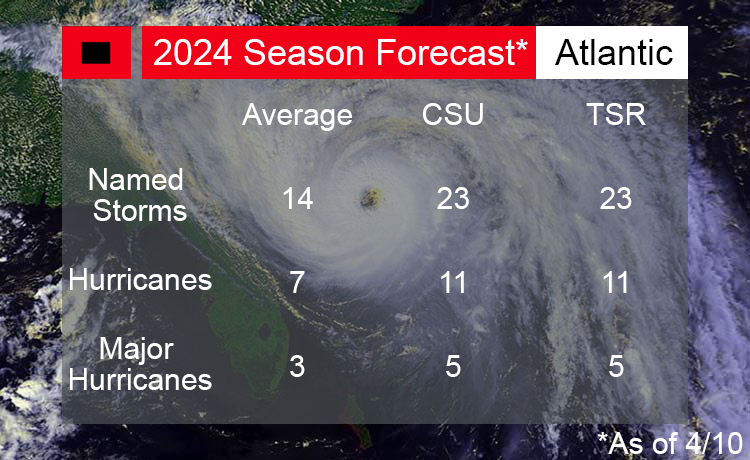
As we get closer to the 2024 Atlantic Hurricane Season, many Floridians are starting to prepare their homes and families for potential storm impacts. While it is impossible to know exactly when and where a hurricane or tropical storm could hit, experts predict the overall intensity of a hurricane season. According to multiple sources, including Colorado State University (CSU), the UK’s Tropical Storm Risk (TSR), and WPBF meteorologists, the 2024 Atlantic Hurricane Season is likely to be an extremely active season.  

The researchers at CSU are well known to be the top experts for hurricane season predictions, and they predict not just an above-average amount of storms. "We anticipate a well above-average probability for major hurricanes making landfall along the continental United States coastline and in the Caribbean," per the latest CSU report. For the entire US Continental Coastline, CSU predicts a 62% chance of landfall of a Major Hurricane (defined as a category 3, 4, or 5). This is up from the average of 43% from 1880-2020). Specifically on the East Coast, including Florida’s Atlantic Coast, they predict a 34% chance of landfall of a Major Hurricane, up from 21%. 

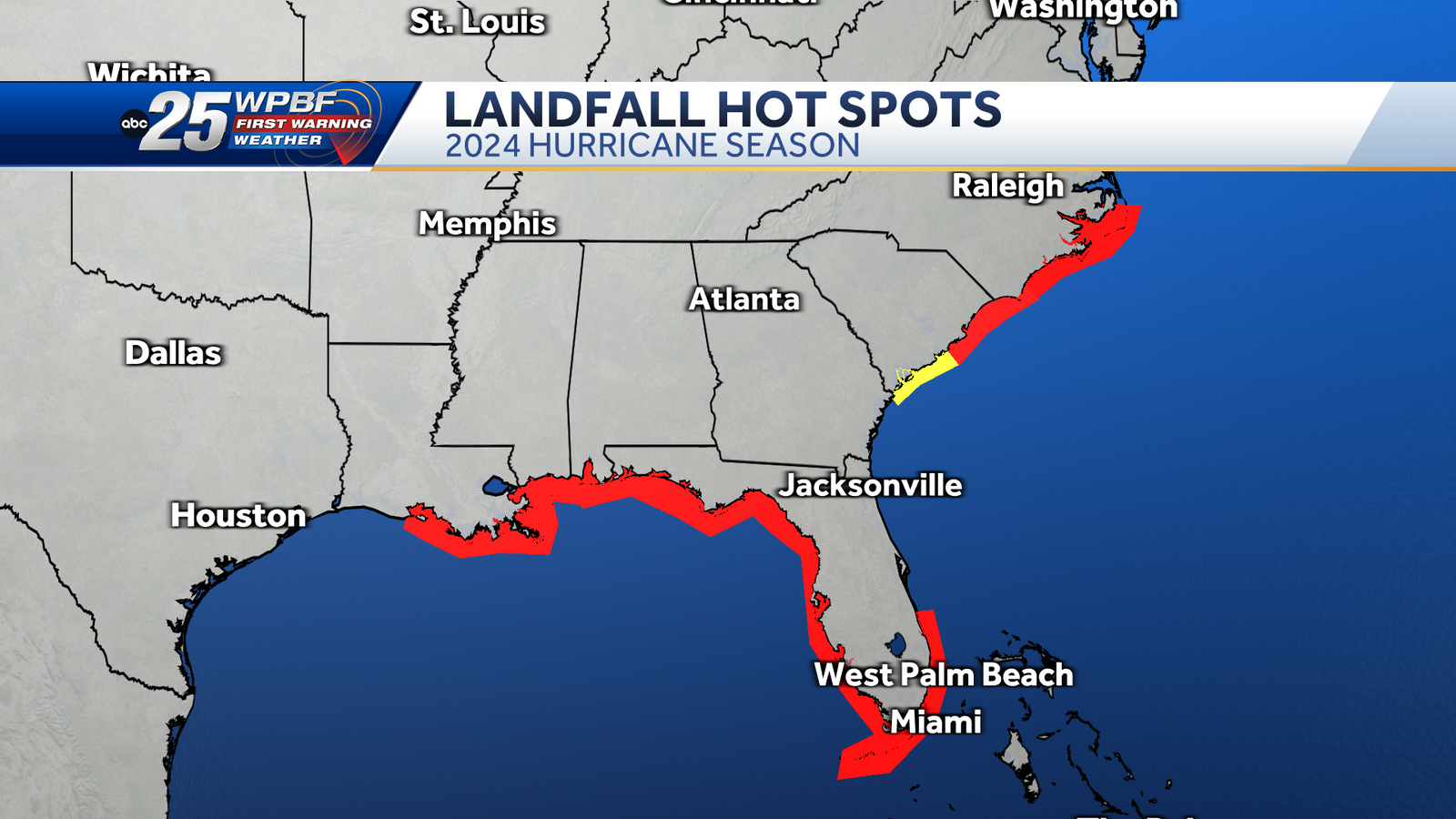
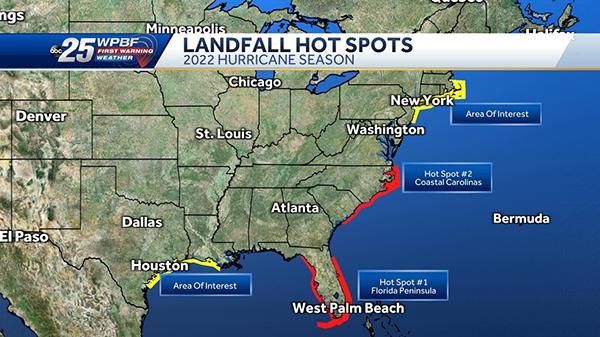
They are not the only ones with predictions on the general locations of potential landfalls. WPBF meteorologists use the Lezark Recurring Cycle (LRC) to predict approximate landfall locations. In 2023, “...100% of the storms that made landfall in the United States made landfall in areas we forecast as having the highest potential for landfills, which we call ‘Hot Spots.’” For 2024, they predict a high likelihood of landfall in our service area, mapped below.  

Source: WPBF
Source: WPBF

With these predictions, it is very important to begin preparations to predict your home and family during the upcoming Hurricane Season. Download our free comprehensive Hurricane Guide to learn all the things you can do now to prepare for the season. If you are considering upgrading to hurricane-impact windows and doors as part of your home’s protection, request a free estimate or call our office at 561-623-8446.  

The Importance of Hurricane Impact Window and Door Maintenance

Upgrading to hurricane impact windows and doors is an investment that can improve the safety and security of your home or business for many years to come. Routine care and maintenance are an easy way to protect that investment by ensuring proper function, maintaining your manufacturer warranty, and finding and addressing potential issues before they can arise.  

Keep Products at Peak Performance 

Every component of a hurricane window and door is essential to its function of keeping storm conditions outside. Regularly cleaning these components ensures that they will continue to function properly. As components vary by window or door type, so will the particulars on how to maintain them. Some examples include:  

1. Cleaning debris and dust from Sliding Glass Door tracks 

2. Lubricate hinges on Casement Windows and French Doors 

3. Clean and thoroughly dry weatherstripping 

Maintain Warranty Terms 

Our industry-leading manufacturer partners all offer their own product warranties covering operable parts, glass, frames, and hardware. Warranty terms can range from periods of 5 years to 30 years, depending on the part and manufacturer in question. The most important thing to know about manufacturer warranties is that they are contingent upon routine maintenance. Failure to clean products and request repairs and new parts in a timely manner can invalidate warranty terms.  

Every manufacturer provides a detailed list of the necessary steps to clean and maintain their products based on the materials that make up the window or door. These guidelines will also dictate how frequently these products should be maintained. For inland areas, this typically is bi-annual cleanings. Coastal areas require a higher frequency due to the corrosive nature of salty sea air. Some products, like wood entry doors, require additional work like annual re-sealing to prevent water intrusion and UV fading. 

Make Repairs Before Problems Arise 

In addition to cleaning, routine maintenance should include thorough inspections of all window and door components. When needed, it is important to conduct quick repairs like tightening loose screws, replacing damaged weatherstripping, or adjusting locking mechanisms. When these components are not functioning properly, they can cause larger issues like water or air leaks.  

After each project is completed, our project managers will provide a Care and Handling Packet that includes all maintenance guides and warranty documentation from each manufacturer used in your home. Following these guidelines will safeguard your investment and your family. Window & Door Replacement Company also offers Ongoing Product Care Solutions that include all manufacturer-required maintenance to make protecting your investment even easier. For free product care pricing, contact our office at 561-623-8446.  

How Are Hurricane Impact Windows Tested?

Before 1992, the State of Florida had lax building codes that were not uniform across the state and were poorly enforced. Then, Hurricane Andrew devastated South Florida in August of 1992. Since then, Florida has hardened its rules and created one of the most stringent codes in the world.

Florida Building Code (FBC) requires some form of hurricane protection for exterior windows and doors on all occupied buildings, whether that be hurricane impact windows and doors or an approved shutter/covering system. But how do you know which products are approved for use in the State of Florida and in your city or county?   

To be used in the State of Florida, certain types of structural components (including windows and doors) must be “…tested and registered with the state of Florida through their statewide product approval system.” The statewide system is available through and enforced by the Florida Building Commission, a division of the Florida Department of Business and Professional Regulation.

There are 2 acceptable documents to prove this testing occurred and was passed, a Florida Product Approval (FLPA) or a Miami-Dade Notice of Acceptance (NOA). These documents can be used interchangeably in some cases, but not always.

FLPA vs NOA

Florida Product Approvals are the documents used in the statewide system to signify building products that meet the criteria for use, as dictated in the current edition of the FBC. However, in some instances, FLPAs are not accepted in Broward or Miami-Dade counties. This is because these 2 counties are classified as the High-Velocity Hurricane Zone, or HVHZ. All products used in these counties must then be certified as passing HVHZ testing, which is even more stringent.

Florida wind speed map
Image Source: discover.pbcgov.org

This is the main difference between FLPAs and NOAs. NOAs are only given to products that meet HVHZ requirements, while FLPAs are given to both HVHZ and non-HVHZ products. Only when an FLPA shows the product as also meeting the HVHZ requirements will it be accepted in Broward and Miami-Dade counties. Additionally, it is not guaranteed that an NOA will be accepted outside of Broward and Miami-Dade Counties. In order for that to happen," ...either by the NOA holder registering the NOA with the state system and obtaining a state FL number... or by a process called a Local Product Approval." If one of those conditions is met, then the NOA can be accepted anywhere in the State. Most manufacturers provide an NOA that is accepted throughout the state or has gone through both the FLPA and NOA processes. 

FLPAs and NOAs are both comprised of 2 sections: evaluation reports and installation instructions. The evaluation reports detail what parameters were used for testing, and what third-party certifies the results of the testing. The installation instructions show the exact guidelines for how the products need to be installed in the structure to ensure they will be as strong as the test results indicate. For example, an NOA can dictate the type of fastener that an installer needs to use, how many fasteners are needed, and even the arrangement of the fasteners. Building inspectors will compare the installation to the diagram in the NOA before allowing a window or door to pass inspection.

What testing is done for hurricane impact windows and doors?

These products must also be tested for and given a rating for water intrusion, design pressures, and energy ratings.  

Impact Tests

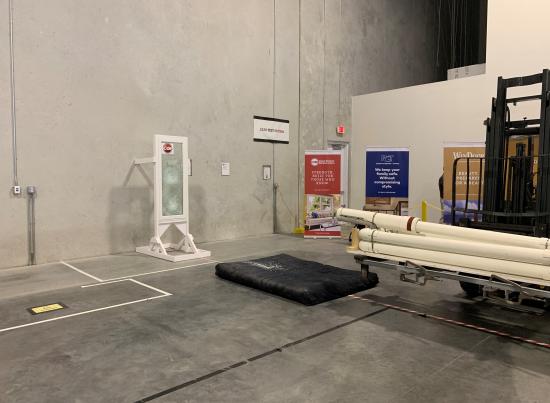
While many people may be familiar with the Cannon Test used on impact windows and doors, this is not the only test conducted during the approval process…though it may be the most fun to watch. This shows the process of Large Missile Impact testing, as conducted by one of our manufacturing partners, PGT Innovations.


Did you know there is a second kind of impact testing? Some products may be tested for Small Missile Impact (SMI). “The small missile impact glass/system will be used in higher locations of a building (4th floor and above usually) because it needs to resist high-velocity winds…Large missile impact glass/systems are located on the first floors (3rd floor or below usually) where a heavy impact is more likely to happen.” The SMI testing is done by shooting a group of small ball bearings at high speeds at a product. This is because once you are above approximately 35-40ft in the air, the type of projectiles that are carried by storm winds changes.

The 2x4 used in LMI cannon tests is a stand-in for heavy storm debris that may be thrown around in a hurricane, like building materials, tree limbs, lawn furniture, and other lawn décor. The ball bearings mimic things like gravel and small rocks.

Water Tests

Hurricanes and tropical storms don’t just toss around debris, they also bring a lot of wind-driven rain with them. Therefore, the next test for hurricane windows and doors is the water test.

To conduct the water test, many gallons of water are poured onto the exterior of the window or door very quickly. The volume of water used in testing exceeds any naturally recorded rainstorm. Then, a system is used to pump air behind the water toward the product, simulating the wind-driven rain common in storms.


As long as no water gets through any part of the window or door to the interior, then the water test has been passed. The rating given to the window or door indicates the volume of water the product can withstand with zero leaks. Some doors, like French doors and sliding glass doors, will have different water ratings based on the height of the threshold.  

Design Pressures

Design pressures are the indication of the positive and negative pressure a hurricane window or door can withstand before failing. In this case, failing means either a hole is torn into the glass, the frame warps, a component is pulled out of place, or the frame is pulled out from the wall. “To determine a tested window’s design pressure rating, the test pressure must reach 1.5 times the design pressure for 10 seconds without the window suffering permanent damage.”

Design pressures needed for a particular building are determined by 3 factors: the distance of the building from open areas like the ocean (aka the exposure), the height of the building, and where on the building the window or door is located (aka the zone). Building Code states that the building components, including impact windows and doors, must meet or exceed the building’s required pressures to be approved for use.

 Energy ratings

The final type of ratings available on impact windows and doors are energy ratings. While these do not affect the structural integrity of the product, in some parts of Florida the energy rating of a product is just as important for getting it approved for use in a home as the structural ratings.

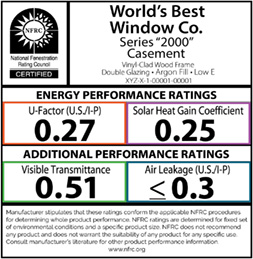
Product labels are required to include the following information regarding energy, which you can read more about here

  • U-Factor
  • Solar Heat Gain Coefficient (SHGC)
  • Visual Transmittance (VT)
  • Air Leakage

Are impact windows Category 5 rated?

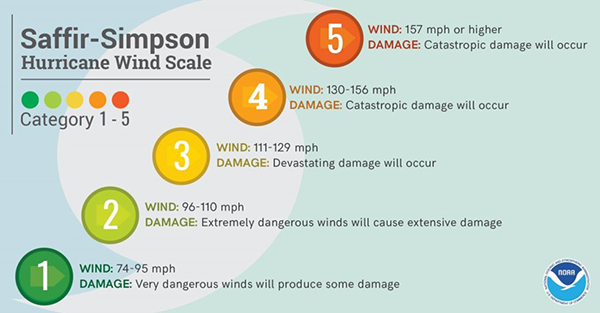
While hurricane window and door testing does not apply category ratings to their products, testing parameters can mimic conditions from the strongest storms. The design pressure rating for impact windows and doors directly relates to the wind speed it is rated to withstand. Category 5 storms are any storms with wind speeds of 157mph or more. According to this wind speed calculator, a DP rating of 65psf is equivalent to 159.34mph.

Saffir Simpson Scale
Image Source: nhc.nooa.gov

For many residential and commercial structures, it is not required to have building components that can specifically withstand a category 5 storm. This is true of any building that is below 3 stories and more than 1,000 feet away from a mile-wide open area, like the ocean. A standard 1-story single-family home, more than 1,000 inland from the coastline, only needs to meet maximum DP ratings of +38.7/-51.0. This means the doors and windows can still withstand 141mph winds, which is unlikely to occur that far inland and represents a category 4 storm in terms of wind speed. The Florida Building Code determines the types of winds that structures throughout the state based on historic data from previous storms.

Hurricane impact windows and doors need to ensure a lot of stringent testing in order to meet the Florida Building Code. This means you can have peace of mind knowing that your home will be protected from storm debris and wind-driven rain in a storm. Request a free estimate and in-home consultation to find out what impact products are best for your home. 

Can Impact Windows Break?

Over the last few years, impact-resistant windows have become more and more popular in South Florida, and with good reason. Impact-resistant windows are often called impact windows or hurricane windows because of their ability to protect your home and family from storm damage. With so many names used, there tends to be some confusion as to what impact-resistant windows and doors are capable of, so we answered some of the most common questions. 

Can Impact Windows Break?

There is a common misconception that hurricane windows and doors are “impact-proof”, but that is not true. They are called impact windows because they are impact-resistant, not impact-proof. The glass may crack when it’s hit, but it will not break into pieces, or break away from the frame. This prevents any debris, wind, or rain from entering your home and causing further damage.  

 
How Do Impact Windows Work?

While all components of a hurricane impact window are crucial to keeping your home safe, the most important piece is the laminated glass used. Laminated glass is made of a vinyl interlayer, usually polyvinyl butyral (PVB) or SentryGlass Plus (SGP), sandwiched between two pieces of annealed or heat-strengthened glass. It is the same basic composition of a car’s windshield, simply many times thicker and therefore much stronger.

Next, the frame is made of stronger materials than non-impact windows, like extruded aluminum, reinforced vinyl, or a combination of solid wood and extruded aluminum (also known as wood-clad products). The glass is inserted into the frame with high-strength structural silicone, also helping to keep the window intact after an impact.

Are Impact Windows Bulletproof?

No, hurricane Impact windows are not rated as bulletproof. For a window or door to be rated and sold as a bulletproof window, it must undergo ballistic testing, which is different from impact testing. However, there have been some examples of impact doors and windows stopping intruders, which shows that hurricane windows can help prevent burglary.

Intruder protection is just one of the additional benefits of hurricane windows and doors due to their unique makeup. To learn more about impact products and how they can benefit your home and family, request a free estimate or call 561-623-8446. 

2022 Atlantic Hurricane Season Predictions

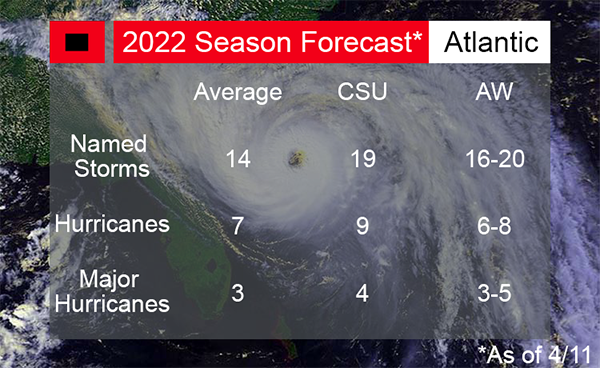
With less than 2 months before the start of the 2022 Atlantic Hurricane Season, seasoned forecasters have released their annual predictions on what we may be able to expect this year. Researchers and forecasters from Colorado State University, whose Tropical Meteorology Project is widely regarded as a leader in hurricane forecasting, and AccuWeather released their predictions earlier this month. 

Both CSU and AccuWeather predict an above-average season for all 3 metrics (named storms, hurricanes, and major hurricanes).

These predictions are based on several factors, including “Current weak La Niña conditions…while Caribbean and subtropical Atlantic sea surface temperatures are warmer than normal.” In addition to a predicted above-average number of storms, it is also predicted by CSU that there will be an above-average impact to US coastlines and their residents.

Agreeing with this prediction of above-average coastline impacts is Glenn Glazer, First Warning Meteorologist at WPBF 25 News. He crafted his prediction using a relatively new system of forecasting, the Lezak Recurring Cycle (LRC). But don’t let its newness fool you, it is also highly accurate. “In 2021, using this forecasting method, 75% of the storms that developed were correctly forecasted.”

Using this method, Glazer predicts that the #1 landfall hotspot in the 2022 Season will be the Florida Peninsula, both East and West coastlines. The second predicted hotspot is the Coastal Carolina area, and finally, areas on the Gulf Coast and in New England are listed as areas of interest.

WPBF 2022 Hurricane Season Forecast
Image Source: WPBF


These predictions are a stark reminder that in all hurricane-prone areas, it is important to be prepared for every hurricane season. These predictions are helpful tools for preparation, but as any Floridian can tell you, hurricanes and tropical storms can still make last-minute course and intensity changes that affect where they make landfall and what areas receive the worst damage. “Deanne Criswell, administrator of the Federal Emergency Management Agency, and Ken Graham, director of the National Hurricane Center, said they worried that many Floridians living in coastal communities had gotten complacent about making hurricane preparations since there hadn’t lived through major storms in recent years.”

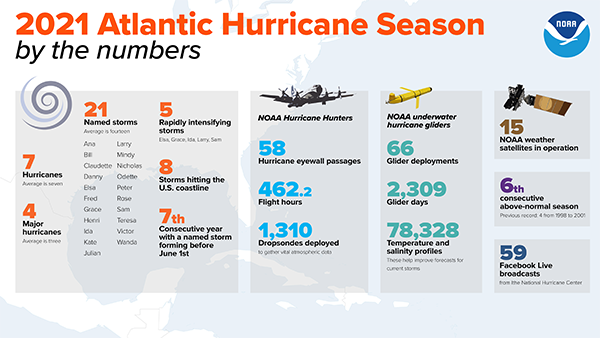
For the last 2 years, the Atlantic Hurricane Season proved to be even more active than predicted. In 2020, several records were broken, including the most named storms in one season since tracking began. The 2021 season “…was the third most active year on record in terms of named storms, it marks the sixth consecutive above-normal Atlantic hurricane season, and this was the first time on record that two consecutive hurricane seasons exhausted the list of 21 storm names.”

NOAA 2021 Hurricane season recap
Image Source: NOAA


It is highly active seasons like these that have prompted some changes within the National Hurricane Center (NHC), and led to consideration of other changes. 2021 marked the 7th year in a row that a named storm formed before the official June 1st start date of the Atlantic Hurricane Season. In response, last year officials decided to begin releasing official forecasting tools on May 15th.   

Before that decision was made, “…federal officials inside the NHC and other branches of the National Weather Service began exploring the idea of moving the start of the Atlantic hurricane season to May 15….According to the NHC, internal discussions about making the change ‘are ongoing’ and when asked whether a change might be introduced for the 2023 Atlantic hurricane season, [NHC communications and public affairs officer Dennis] Feltgen said it's ‘unknown at this time….’”.

Another change that some have pondered in the past few years is whether a Category 6 designation should be added to hurricane forecasting. The current hurricane measurement, the Saffir-Simpson Scale, maxes out at category 5, which describes any storm with sustained winds of 157mph+. Some argue, that because the scale uses intervals of around 20-25mph, a new designation for hurricanes of about 178mph or more should receive a designation of Category 6. There have been 18 such storms since 2010, including Hurricanes Irma and Dorian in 2017 and 2019 respectively.

However, this change is unlikely to happen officially anytime soon. When asked if a Category 6 designation would be added in the future, Feltgen said:

"NHC has tried to steer the focus toward the individual hazards, which include storm surge, wind, rainfall, tornadoes and rip currents, instead of the particular category of the storm, which only provides information about the hazard from wind. Category 5 on the Saffir-Simpson Hurricane Wind Scale already captures 'Catastrophic Damage' from wind, so it's not clear that there would be a need for another category even if storms were to get stronger.”

Even without an official category to designate these storms, researchers are trying to learn more about these kinds of storms and determine how we can be more prepared. In February of this year, the Florida International University (FIU) Extreme Events Institute received a $12.8 million agreement with the U.S. National Science Foundation to develop a testing facility capable of producing 200mph winds and storm conditions. This will allow the Institute to test these conditions against structures to determine what, if anything, needs to be done to protect Floridians and other vulnerable populations from these massive storms in the future.

Predictions and looking to the future are useful ways for us to better prepare for hurricanes. While we can’t know if a hurricane or tropical storm will make direct landfall until it occurs, it is never too early to start planning for a disaster and gathering supplies. Our comprehensive Hurricane Preparation Guide outlines all the information you will need to best protect your family during the upcoming season.

If you are trying to decide what kind of window and door protection is best for your home and property in the future, our Hurricane Shutters vs Impact Windows analysis provides helpful pros and cons for both forms of protection so you can make the best decision. For a free consultation on hurricane impact windows and doors, fill out our form or call 561-623-8446.
Are Impact Windows Energy Efficient?

Before the late aughts and early 2010s, most single-family homes and condos in South Florida were built with non-impact, single pane aluminum windows and doors. These are the least energy-efficient option for windows and doors. Because of the glass makeup and strict installation standards of hurricane impact windows and doors all impact products, even aluminum-framed products, are more energy-efficient than their non-impact counterparts.  

Understanding Energy Ratings

To determine how energy efficient your impact windows and doors are, it is important to understand the different ratings given to windows and doors. All the following definitions are from the Office of Energy Efficiency & Renewable Energy, an office of the U.S. Department of Energy.

U-Factor

“U-factor is the rate at which a window, door, or skylight transmits non-solar heat flow… The lower the U-factor, the more energy-efficient the window, door, or skylight.”

Solar Heat Gain Coefficient

“Solar heat gain coefficient (SHGC) is the fraction of solar radiation admitted through a window, door, or skylight -- either transmitted directly and/or absorbed, and subsequently released as heat inside a home. The lower the SHGC, the less solar heat it transmits and the greater its shading ability.”

Visible (Visual) Transmittance

“Visible transmittance (VT) is a fraction of the visible spectrum of sunlight…that is transmitted through the glazing of a window, door, or skylight. A product with a higher VT transmits more visible light.”

VT is an important rating for any oceanfront property. Florida Coastal cities have Turtle Codes, the common name for ordinances dictating that any window or door that directly faces the water has a VT rating of 0.45 or lower to protect hatching sea turtles.

Air Leakage

“Air leakage is the rate of air movement around a window, door, or skylight…A product with a low air leakage rating is tighter than one with a high air leakage rating.”


Sample NFRC Energy Rating Label. Source: NFRC.org

Improving Energy Efficiency of Impact Windows and Doors

For projects that need to meet higher energy code standards, there are several impact window options that further improve energy efficiency. Some of our hurricane window and door options even carry an Energy Star Rating, meaning they meet stringent energy ratings for our region.

Frame Materials

Energy ratings take not only the glass into consideration but the frame as well. Therefore, the material used to construct the frame will directly affect the overall energy efficiency of a window. There are 3 window frame options to increase the energy efficiency of your impact windows and doors.

Thermally Broken Aluminum

Thermally Broken Aluminum is used to describe an aluminum frame made of 3 parts:

  1. Interior Aluminum Frame
  2. Plastic or rubberized middle layer of insulation
  3. Exterior Aluminum frame

The middle layer of plastic or rubberized material helps to prevent heat transfer between the 2 aluminum frames. “…by adding a break between the exterior and interior of a frame, window and door manufacturers prevent the transfer of heat or cold. The break creates an insulated barrier within the frame, which improves energy efficiency for the entire home.” 

Wood-Clad

Wood-Clad is used to describe a frame constructed of 2 parts: a wood interior and an extruded aluminum “cladding” on the exterior. Wood is a natural insulator, therefore the wood interior framing helps to regulate the temperature inside the home, especially during drastic temperature changes outdoors. The more stable the home’s interior temperature, the less energy is used by the A/C or heating system to maintain the climate.

Vinyl

Vinyl impact frames are constructed with hollow chambers throughout the frame, serving as a good insulating material while maintaining the strength needed to reach high-impact ratings. “…vinyl windows have a secondary financial advantage in that they have very strong thermal performance ratings and are excellent at reducing air drafts. These qualities add up to lower utility bills and less wear and tear on your HVAC system.

Glass

Tints

Tints are a coloration added to the glass itself, typically gray or bronze, and it helps to reduce both SHGC and VT. This means tints will reduce both the heat entering the home, and also reduce some of the natural light coming into the home, making rooms a bit darker.

Impact Sliding Doors and Impact Window with Low-E
Low-E

Low-E coatings, meaning Low Emissivity coatings, have a few different names depending on the manufacturer (Low-E, LoE, SolarBan, EnergyShield, Solar Control, etc.). These names all refer to a silver oxide coating applied to the glass that helps to reflect a large portion of the UV rays coming from outside. Those reflected UV rays help to reduce the SHGC, making your home cooler. The advantage over tints is that Low-E coatings will not affect the view, as no coloration is visible from inside the home. These coatings have the added benefit of preventing fading of furniture, artwork, and other finishes from those harmful UV rays.

Insulated glass

Insulated glass refers to a construction of glass that uses 2 pieces of glass separated by an airspace. In impact windows, one of these pieces of glass will be laminated glass (the technical name for impact glass) and the other is tempered. This pocket of air helps to absorb and trap heat from outside, decreasing the SHGC. It can also prevent the transfer of cold temperatures in winter conditions.

How Window and Door Installation Affects Energy Efficiency

How an impact window or door is installed is another factor in how energy efficient the product is going to be. When installed properly, the seal around the frame should be weather tight, which will prevent air leakage. The less air that leaks is good to help maintain temperatures, and therefore your A/C system should work less, saving energy and money. 

Upgrading to hurricane impact windows and doors has a multitude of benefits along with improved energy efficiency and storm protection. To learn more about these benefits and the options available, request a free consultation with our remodel consultants or call 561-623-8446.
The Importance of a Quality Impact Window Installation

When deciding to upgrade to impact windows and doors, the quality of the installation is even more important than what product you choose. Even the highest quality product with a sub-par installation will not provide protection for your home and family, can cause costly repairs, and likely won’t even pass required building inspections. This will need more time and money to correct. 

As the South Florida hurricane impact window and door industry has grown, it has become harder to decide which window and door installation company is the best one for your project. While there are several factors that may help you vet a contractor, we've outlined detailed information that can help show what makes a high-quality impact window and door installation different. 

The Team

An installation of the highest quality depends on the whole team involved in the project.

Sales Consultants: The sales consultant must verify the facts about your project that will determine the best products to use, like the material used to construct your home and what kind of window frame will be needed for that material.  Did you know that different windows must be used for wood-frame homes than CBS homes? It’s crucial that the sales consultant chooses the correct frame type.

Final Measure Technician: Not every impact window and door company has a Final Measure Technician, but those that do (like WDRC) understand that ordering a custom-made product that is within 1/16” of the existing product is the best way to ensure a timely installation. It also prevents the need for additional materials to pad the opening, like adding extra plywood or shims, if the window ordered does not fit properly.

Project Manager: The project manager ensures that all aspects of the project are operating to company standards. This can include what materials are being used during installation, what in-home protection is being used, and making sure all documentation is ready for building inspections.

Installation Crews: Installation crews should be well-versed in every aspect of a project. This means they should know the requirements for the proper installation of the product you choose as well as for the building type. Installing a sliding glass door in a single-family home is not the same as installing one in a high-rise condo where you must consider factors like balconies and possible post-tension cables.

The Materials

An installation includes many more materials than just the windows and doors, and it is vital that these products are also the best available. Using high-quality waterproofing materials is the difference between leaks occurring a year after install. Composite shims eliminate the concern of wood shims warping and rotting within the frame. The correct tapcons are not only stronger and last longer, but are often required by the Florida Building Code in order to pass inspection and for the hurricane window or door to be approved for use.

Risks of a Poor Installation

If your impact windows and doors are not installed properly, there are several things that can go wrong:

  • Products failing in a storm
  • Leaks, stress cracks, and gaps
  • Pests
  • Failed Inspections, open permits, and fees

Upgrading to hurricane impact windows and doors is an investment, and deciding on an experienced installation partner is an essential part of that investment. To learn more about the installation process or request a quote,request a free consultation with one of our Design & Remodel Consultants. 

Are Impact Windows Soundproof?

Many people ask us “Are Hurricane Impact Windows and Doors Soundproof?” While these products are not considered soundproof, they do provide a significant amount of sound reduction when compared to standard non-impact windows and doors. It is one of the many additional benefits that hurricane windows and doors can provide your home and family.

So how do hurricane windows and doors provide sound reduction? It all comes down to how the impact glass is created.

Impact-resistant glass is made by combining two thin pieces of standard glass and fusing them with a layer of a vinyl interlayer between. This vinyl interlayer, usually polyvinyl butyral (PVB) or Sentry Glass Plus (SGP), is what prevents the glass from breaking apart if it is hit by a flying object. 

PGT Laminated Impact Glass
Image Source: PGT Windows


This interlayer also “...has a different density from the glass, breaking up the sound.” This sound disruption can be measured using the Sound Transmission Coefficient (STC) Rating. The higher the rating, the more noise is blocked by the window or door. Here are some STC ratings for non-impact and impact glass, according to BetterSoundProofing.com.

Single pane 1/8” has an STC between 21 and 28
Two sheets of 1/8” glass with 3/100” PVB: 1/4″ pane with an STC of 35
Double those dimensions and the value improves to 39

These ratings show that while impact windows and doors are not soundproof, they can reduce some of the most common irritating noises, like lawnmowers, airplanes, and traffic. PGT Windows provides a tool to demonstrate the difference in noise levels between non-impact and hurricane impact windows. If you have a specific noise irritant in your neighborhood, use this tool to compare the sound reduction for that specific irritant. 

If you prefer a live demonstration, CGI Windows featured a noise reduction chamber in their showroom that can show you the noise reduction in real-time. This chamber is constructed of Casement Windows, and inside is a speaker playing jet engine noise. You can see once the window is closed and sealed, the noise is significantly less than before. 

Whether you live near the Brightline train tracks, near common areas like golf courses and pools, or just have a neighbor that is louder than you like, impact windows and doors may be a solution to improve the conditions in your home, making your space more relaxing. 

If you are interested in learning more about the lesser-known benefits of hurricane windows and doors and would like to schedule a free consultation, contact our office at 561-623-8446 or fill out our request form

Advantages of Custom Impact Windows and Doors

Every home is unique. Even in the same neighborhood, each home is imbued with the personality, style, and goals of the homeowner. This is just one of the many reasons to custom order hurricane impact windows and doors when upgrading your home. We partner with over a dozen manufacturers to make sure everyone gets a product exactly suited for their project. Aside from design and style, there are several more practical advantages to custom products. These options avoid install issues, allow for better function, and ensure all codes can be met with one product.

DESIGN AND STYLE

The most exciting part about custom impact windows and doors is the freedom to make any design or style choice for your products. You can choose frame colors, glass designs, hardware shapes and finishes, and even the shape of the window or door itself.

FUNCTIONALITY

Beyond the looks of windows and doors, it is also important to consider their functionality. Some sliding, some swing, and others are stationary. An existing opening can be entirely changed, like changing a single door with sidelites to a double door for more space, or replacing a single hung window with a casement to improve airflow. Custom sizing allows the new products to fit old openings while still allowing for a different function.

A commonly used customization option for sliding glass doors is to order the door slightly taller than the opening in order to recess the track. This helps to reduce the amount of sill sticking up above your finished floors, helping to lessen the tripping hazard. This makes it easier and safer than simply ordering the standard door size.

INSTALLATION

As part of our process, we include a final measure conducted by our veteran measure technician. These measurements are done to make sure your products are ordered within 1/8” of your opening size. Why? Because doors and windows that fit exactly dramatically improve the installation process and final look of the opening.

If the products fit in the opening perfectly, there are no installation delays from trying to widen openings or fill open spaces. If there are no significant gaps, then it is not necessary to fill them with wood, excess sealants, or break metal which can be unsightly. And finally, where there are no significant gaps, then a normal amount of sealant (aka caulking) is all that is needed to make your openings watertight and air-tight.  

CODES

When installing new hurricane impact windows and doors into a home, condo, or business, there are several codes, laws, and regulations that need to be followed. The first one that all projects must meet is the Florida Building Code. This code will dictate exactly how strong these hurricane windows and doors need to be, judged by the design pressure ratings of the product.

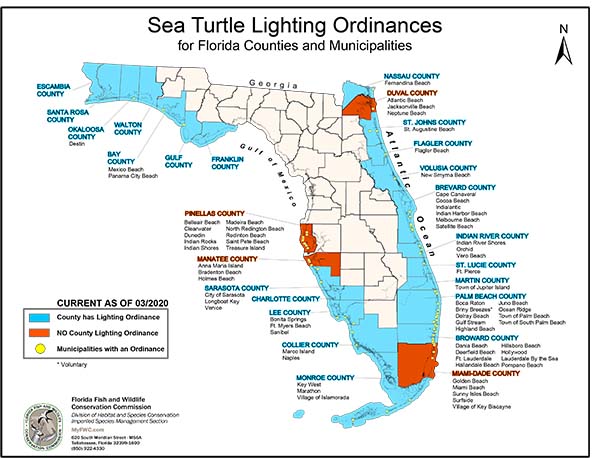
Next, you must consider local ordinances. This is usually determined at the municipality or county level, depending on exactly where you live. The most common ordinance that affects windows and doors is Turtle Code glass requirements. This is the general name given to Sea Turtle Light Ordinances, which “…control beachfront lighting to protect hatching sea turtles.” Allowing homeowners to choose whichever glass they prefer that complies with this ordinance is one way that customization works to appease regulations while still meeting design goals.

Image Source: https://myfwc.com/conservation/you-conserve/lighting/ordinances/

Another common local ordinance type is historical codes and regulations. These are applicable in designated historical districts, like those in West Palm Beach and Palm Beach Island, and they dictate what kinds of designs are allowed on the exterior of the home. These can include frame colors, muntin patterns, and even opening functionality – like single hungs vs casements. This is done to preserve the overall aesthetic of historical areas and structures. One way to use customization here is to choose windows and doors that exactly match the exterior regulations while allowing more options on the interior. For example, wood-clad windows and doors are a great way to match the regulations to the exterior, like white frames and colonial muntins, but use more modern design choices on the interior, like painted wood finishes and matte black hardware.

The final piece to the puzzle is to check the rules of your HOA/POA, if applicable. Some dictate the frame color, glass color, and/or muntin patterns on street-facing windows and doors. Our windows and doors can be customized to fit any existing style that an HOA, POA, or Architectural Board may require. 

To learn more about all the customization options for hurricane impact windows and doors, request a free estimate with our Design & Remodel Consultants by filling out our form or calling us at 561.623.8446. 

Do Hurricane Impact Windows Reduce Insurance?

When considering an upgrade to impact windows and doors, many people’s first concern is protecting their homes and families from hurricanes. While this is the reason these products are often referred to as hurricane windows and doors, it is not the only benefit they can provide. These hurricane protection upgrades can also help reduce costs for Florida Homeowners Insurance policies.

While many factors will determine the exact discount an insurance company will offer, it is required by the State of Florida for insurance to offer these discounts for hurricane protection measures. Passed in 2005, this law states that homeowner’s insurance companies are required to file a list of discounts with the Florida Office of Insurance Regulation for certain construction types or hurricane mitigation measures, including impact windows and doors.

So, what does that mean for you and your homeowner’s insurance premium? Right now, you are likely asking yourself “Do impact windows reduce insurance costs in Florida”? The short answer is yes, they can. According to Olympus Insurance, “To qualify for an opening protection discount, all exterior entries and glazed exterior openings (including doors, windows, skylights and main vents, but excluding roof ridge, gable, soffit and plumbing vents), must be completely covered with impact resistant protective materials.”

While all openings must be protected from hurricanes, not all these openings must be hurricane impact windows and doors. Other certified impact-resistant coverings can be used, like accordion shutters, in combination with impact windows and doors. A popular option for upgrading to hurricane windows and doors is to replace hard-to-reach windows, like clear story windows or those on a second floor, while using certified shutters on lower-level windows and doors that are easy to reach.

To determine if your home qualifies for this discount, your insurance company will ask for documentation for your impact-resistant products, a Wind Mitigation Inspection to be conducted, or both. The best way to determine your potential insurance savings from hurricane impact windows and doors is to contact your home insurance agent before your project begins.

Potential insurance reductions are just one of the additional benefits of impact windows and doors. These benefits can improve your home and provide opportunities to increase the return on your investment. To receive a free estimate for your home, fill out our form or call our office at 561-623-8446. 
How to Choose a Hurricane Impact Entry Door

Hurricane impact entry doors help to provide improved safety and security as well as a quick improvement to your home’s curb appeal. When choosing which door is right for your home, there is more to consider than just the style. 

Overhangs

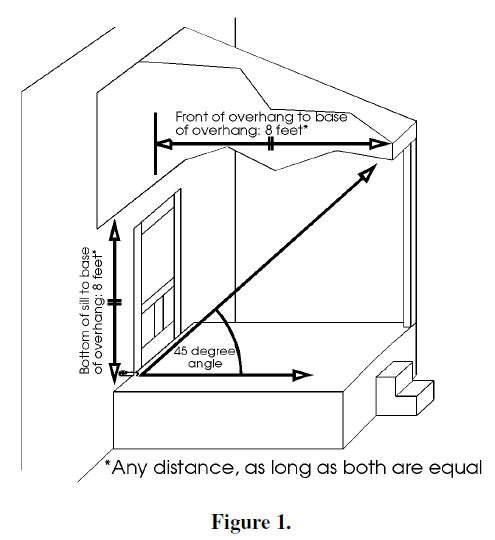
One of the first determining factors in your entry door shopping journey will be to determine if you have an overhang and if so, measuring its length. This is vital to know what type of door you can get since overhangs are necessary for certain wood and pivot doors.  

For these doors, you are required to have an overhang that is a distance, at minimum, equal or greater to the height between the sill of the door the base of the overhang (see below illustration). This is to prevent both sun and water damage to wood doors. For pivot doors, this is to prevent water intrusion since they do not have a water-rated sill.

Door Types

Once you determine the coverage of your overhang, now you are able to choose what kind of Entry Door you would like. There are 2 basic door types for an entry: Swinging Doors and Pivot Doors.

Swinging Doors are available as single or double doors and can be paired with sidelites depending on the size of your opening. This is the standard type of entry door for a home.

Pivot Doors operate on a special hidden hinge that does not need to be on the side edge of the door panel. Pivot hinges can be as far in on the panel as 50% of the width. Pivot doors are increasing in popularity for those wanting a very modern-looking entry, so long as the overhang requirement is met on the home.  

 Door Material

The final decision to make is what material your door should be. Fiberglass is the most popular option for swing doors, while aluminum is popular for swing doors and is the material Pivot doors are available in. Wood is an elegant choice and will require much more maintenance than fiberglass and aluminum. Wood is also only available for homes with the appropriate size overhang.

Glass

There are many glass options available, including privacy glass, decorative glass, glass with enclosed mini-blinds, and even glass with 100% custom designs.


Special Considerations for Commercial Properties

If you plan to replace the entry door on a commercial property, especially those open to the public, there are 2 main determinations to make before moving forward with choosing a door. It must be determined if you are required (or choose to have) panic hardware for the door and/or an ADA (Americans with Disabilities Act) compliant saddle threshold.

There are 3 determining factors in the Florida Building Code for whether panic hardware is required on the front door of your commercial property. First, is the door a designated primary egress point? Second, does the building house hazardous materials? Lastly, for general gathering places, what is the occupant load of the building? If you are required to do so, several of our commercial storefront doors can be outfitted with panic hardware.

ADA compliant thresholds are available on all entry doors we offer. These thresholds, also called saddle thresholds, are required in the following buildings:

  • All local, county, state, and federal government agencies.
  • Any business that relies on the general public or for their benefit.
  • Privately run companies that currently have 15 or more employees.
  • Non-profit and charitable organizations which either have 15 or more employees or which operate for the benefit of the general public.

(Source: ADA Solutions)

Upgrading to an impact entry door is a great way to protect not just from hurricanes, but also keep out intruders and prevent other damage. To get an estimate on an impact entry door, request a free estimate or call our office at 561-623-8446. 


We service several counties on the East Coast including; St. Lucie, Martin, and Palm Beach.

Quote Request

Showroom Appointment

Jupiter Showroom: 861 Jupiter Park Drive Jupiter, Florida 33458
(561)-623-8446 Map